
Explore Our New Services
We’re excited to introduce a new suite of home efficiency solutions designed specifically for the demands of Arizona’s extreme climate. Proper insulation and ventilation are essential to keeping homes cooler, lowering utility bills, and extending the life of HVAC systems in our hot summers. Our offerings now include blown-in insulation, which quickly fills attic and wall cavities to reduce heat transfer and improve comfort; roof venting systems, which promote airflow, control attic temperature and moisture, and ease the strain on cooling equipment; and spray foam lining, known for its superior air-sealing and high thermal performance that can cut cooling costs significantly while enhancing indoor comfort. Together, these upgrades create a more energy-efficient, comfortable, and cost-effective home for Arizona residents.
Insulation
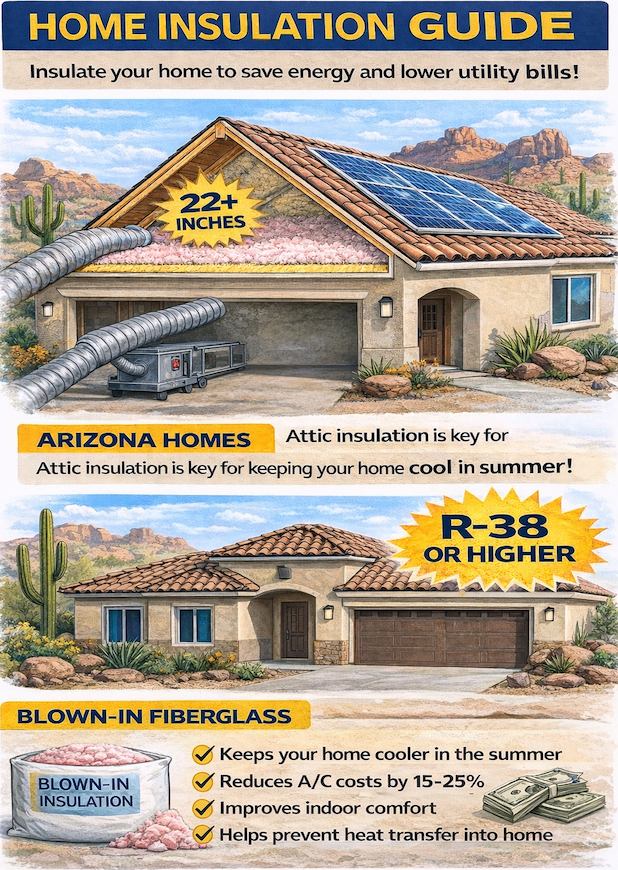
Blown-in insulation is one of the most effective ways to reduce heat gain in Arizona homes. It fills gaps and hard-to-reach areas in attics and walls that traditional insulation often misses, creating a more consistent thermal barrier. By limiting the amount of outside heat entering the home, your air conditioning system doesn’t have to work as hard, leading to lower energy bills, improved indoor comfort, and reduced wear on your HVAC equipment.
Roof Venting:
Duct cleaning
Clean, properly sealed ductwork is essential for maintaining efficient airflow and healthy indoor air quality. Over time, dust, debris, and contaminants can build up inside ducts, restricting airflow and circulating pollutants throughout the home. Together, these services improve comfort, reduce energy waste, lower utility costs, and allow your air conditioning system to operate more effectively—especially during Arizona’s high-demand cooling season.
Aeroseal
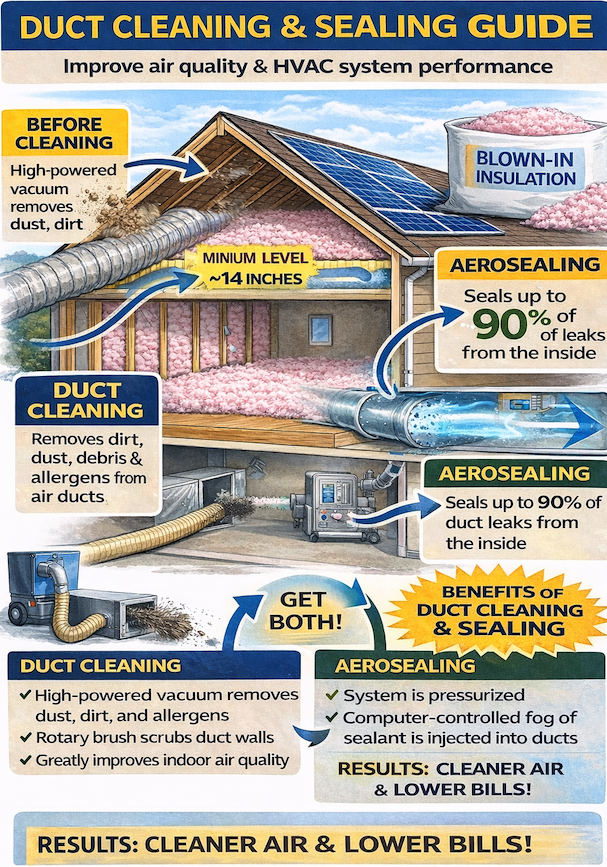
Aeroseal duct sealing is a cutting-edge solution that seals leaks from the inside of your ductwork, improving airflow and overall system efficiency. Unlike traditional methods, Aeroseal targets hidden leaks that waste energy and reduce comfort. This results in more consistent temperatures, improved indoor air quality, reduced strain on your HVAC system, and noticeable savings on energy costs.
Clean, properly sealed ductwork is essential for maintaining efficient airflow and healthy indoor air quality. Over time, dust, debris, and contaminants can build up inside ducts, restricting airflow and circulating pollutants throughout the home. Professional duct cleaning helps restore proper air movement and improves overall system performance. Aerosealing takes efficiency a step further by sealing hidden duct leaks from the inside, preventing conditioned air from escaping into unconditioned spaces. Together, these services improve comfort, reduce energy waste, lower utility costs, and allow your air conditioning system to operate more effectively—especially during Arizona’s high-demand cooling season.